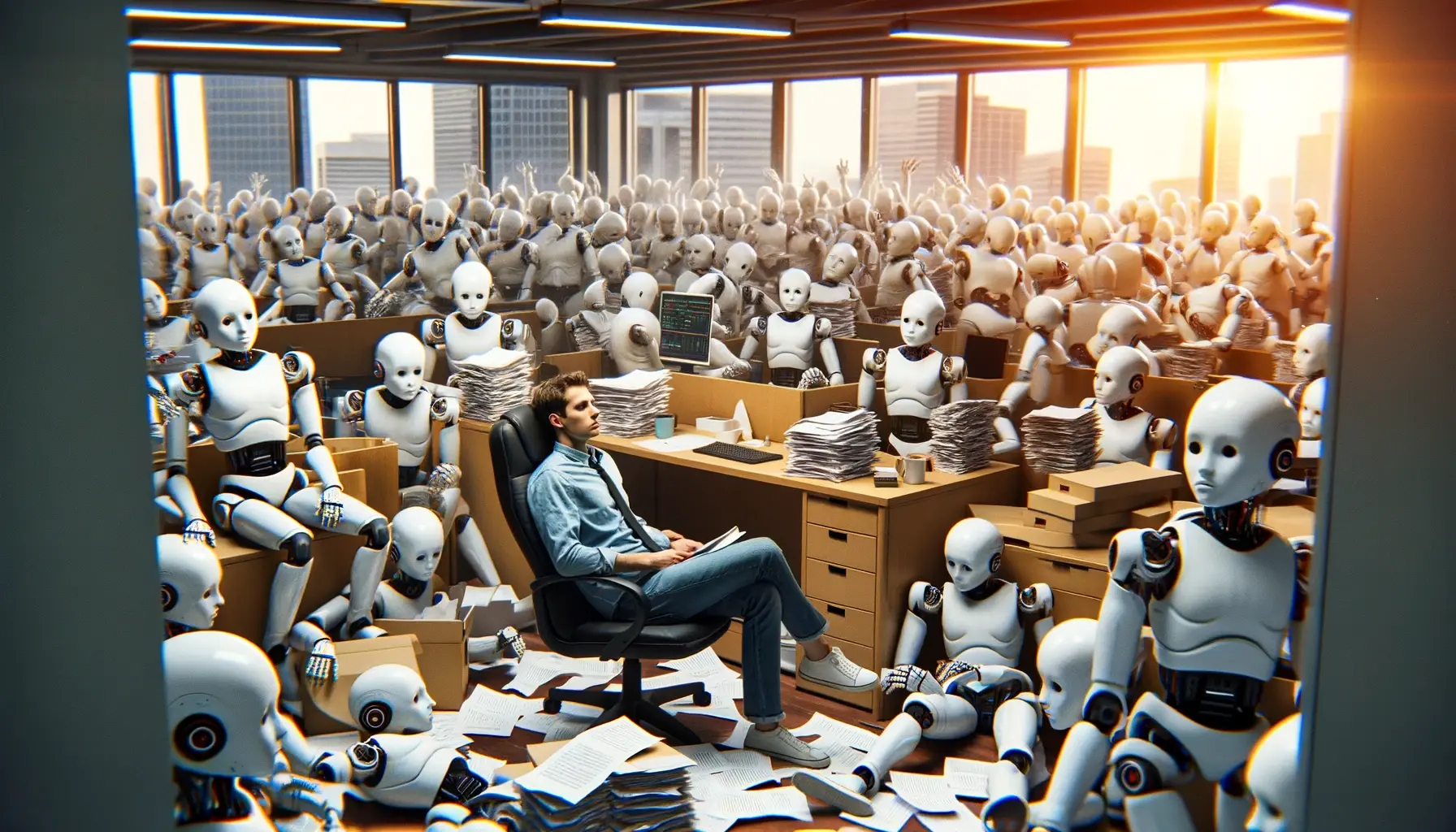
Introduction
Have you ever encountered someone who overestimates their skills and knowledge? This common psychological pitfall is known as the Dunning-Kruger effect. It describes how people with limited knowledge in a field tend to overestimate their abilities. In marketing, this effect is becoming more pronounced with the rise of AI tools. These powerful tools can make anyone feel like a marketing guru, but there’s a catch – they don’t replace the need for true expertise.
As AI technologies evolve, they’re transforming how we approach marketing. From automating routine tasks to generating creative content, these tools offer unprecedented capabilities. They also provide data analysis and AI-based suggestions. However, their ease of use can lead to a deceptive sense of competence. This is especially risky in marketing, where strategic insight and experience play crucial roles. Let’s explore how relying too much on AI without understanding its limitations can lead to costly mistakes.
The AI Shift in Marketing
The Emergence of AI Tools
Artificial Intelligence (AI) has ushered in a new era for marketing professionals. Today, AI tools are used for a variety of marketing tasks, each leveraging technology to enhance performance and efficiency. Content creators use AI to craft engaging articles and social media posts. Analysts deploy AI to sift through vast amounts of data, extracting valuable insights about consumer behavior. Even automation technologies powered by AI have advanced, managing customer interactions and streamlining marketing campaigns with minimal human intervention.
AI-driven automation tools can handle tasks like email marketing, social media scheduling, and personalized customer communications. These tools analyze customer data to determine the best times to send messages, the most effective content, and the optimal channels for communication. They can also segment audiences more precisely, ensuring that marketing efforts are targeted and relevant. By taking over repetitive tasks, AI frees up marketers to focus on strategy and creativity. This significant shift allows for more efficient and effective marketing efforts, ultimately driving better results.
Immediate Benefits and Broad Access
The accessibility of these AI tools has transformed the marketing landscape. Previously, tasks like in-depth data analysis or high-quality content creation were reserved for those with specialized training or resources. Now, AI platforms offer these capabilities without the steep learning curve or high cost. This democratization means small businesses and individual entrepreneurs can perform at the same level as larger corporations, at least in terms of generating and analyzing content. This shift not only levels the playing field but also opens up new opportunities for innovation and growth across all sectors of business.
The Illusion of Expertise
A Fool with a Tool is Still a Fool
Access to sophisticated AI tools does not automatically grant the user expertise in marketing. While these tools can perform specific tasks, they require proper direction to be effective. A common mistake is assuming that because the tool can generate content or analyze data, it can also strategize effectively. However, without a deep understanding of marketing principles, the outputs can be misguided or irrelevant.
For example, an AI might generate a large volume of content, but if it’s not tailored to the target audience’s interests and needs, it will not engage readers or convert sales. Even worse, the facts that an AI output can often be completely wrong. Especially at higher levels of marketing, it is crucial to verify the accuracy of AI-generated outputs. Another instance is using AI to analyze customer data; if the user doesn’t understand the context or the market, they might draw incorrect conclusions and make poor strategic decisions.
Additionally, AI tools used for social media engagement might automate responses, but without a nuanced approach, these interactions can come across as robotic and insincere, potentially harming the brand’s reputation. Consider a scenario where a company uses AI to create email marketing campaigns. If the AI is not properly directed, it might send irrelevant content to subscribers, leading to high unsubscribe rates. Or, a business might rely on AI to set up pay-per-click advertising campaigns without understanding keyword strategy, resulting in wasted budget on ineffective ads. These examples highlight the gap between having access to advanced tools and knowing how to use them effectively.
Real-World Consequences
The misuse of AI tools in marketing can lead to significant setbacks. Consider a case where a marketing agency used an AI tool to automate social media posts. Without proper oversight, the AI posted content that was poorly timed and insensitive to current events. This caused a public relations crisis for the brand. In another instance, an e-commerce company relied on AI for pricing optimization. The lack of human oversight led to pricing errors that undervalued products, resulting in substantial revenue loss. These examples highlight the dangers of over-reliance on AI without sufficient understanding of its application and limits.
Another example is a lawyer who referred in his indictment to a verdict that never existed because he relied on AI to write the indictment. These examples highlight the gap between having access to advanced tools and knowing how to use them effectively.
The Risk of Complacency
Overconfidence Among Novices
One of the major risks of widespread AI adoption in marketing is the overconfidence it can breed among novice users. When individuals experience initial success using AI tools, they might begin to believe they have mastered complex marketing strategies. This overestimation of their abilities is a classic example of the Dunning-Kruger effect. Novices may not realize the depth of knowledge required to truly understand and effectively use these tools. They might assume that because they can produce content or generate reports, they are as capable as seasoned marketing professionals.
The Danger of Unverified Outputs
AI tools can generate content and analyze data quickly, but without proper verification, these outputs can be flawed; remember what I wrote about the lawyer who relied on AI-generated content without verifying its accuracy. For instance, AI-generated content might contain factual inaccuracies or fail to resonate with the target audience. Similarly, data analysis might yield misleading conclusions if the data fed into the AI is incomplete or biased. Many users, trusting the technology blindly, may publish or act on these results without cross-checking them. This can lead to poor decision-making, wasted resources, and damage to a brand’s reputation, or even worse, legal consequences and loss of consumer trust.
The Essential Role of Human Expertise
AI as a Tool, Not a Replacement
While AI tools offer impressive capabilities, they cannot replace the nuanced understanding and strategic thinking that experienced marketers bring to the table. That’s where the deciding details often are. AI can assist with repetitive tasks and provide data-driven insights, but it lacks the human touch necessary for crafting compelling narratives or understanding subtle market shifts. Skilled marketers know how to interpret AI outputs, adjust strategies based on context, and make creative decisions that AI cannot replicate. Not only novice, but skilled marketers as well can fall prey to the sweet poison of getting things done within hours instead of days, so that can happen to everyone. However, experienced marketers might be able to detect distortions of reality faster and earlier than novice ones, due to their years of experience. Their gut feeling is probably way better developed. The human element is crucial for ensuring that AI tools are used effectively and ethically.
Combining AI with Human Insight
The most successful marketing strategies leverage both AI and human expertise. For example, AI can analyze customer data to identify trends and preferences, but it takes a human marketer to translate these insights into a relatable campaign. Another case is content creation: slashing blog article creation time by 90% is, in most cases, an illusion when it comes to the quality of the article. Remember, search engines will devalue poor content. Google will not de-rank your pages because your content has been written by AI, but more because the content is of poor quality. So, in many cases, AI-written content is of poor quality.
Conclusion and Reflection
Summary of Key Points
- Dunning-Kruger Effect: Novices often overestimate their abilities, a risk amplified by the accessibility of AI tools.
- AI’s Emergence: AI tools have revolutionized marketing, offering capabilities in content creation, data analysis, and automation.
- Illusion of Expertise: Access to AI tools doesn’t equate to marketing expertise. Misuse can lead to significant failures.
- Complacency Risk: Overconfidence in AI-generated results can lead to unverified and flawed outputs.
- Human Expertise Essential: AI tools are aids, not replacements. Human insight and strategic thinking are crucial for effective use.
- Synergy: Combining AI with human expertise maximizes productivity and maintains quality.
The Role of AI in My Writing Process
This article was written with the help of AI, but not by AI alone. The insights and strategic context were provided by an experienced marketer, ensuring the content is both accurate and relevant. AI tools assisted in drafting and organizing the content, demonstrating how AI can enhance, but not replace, human expertise.
FAQ
The Dunning-Kruger effect describes how people with limited knowledge overestimate their abilities. In AI marketing, this leads to overconfidence and potential misuse of AI tools.
By combining AI tools with human expertise. Experienced marketers should guide AI use and verify its outputs.
Misguided content, incorrect data analysis, and strategic missteps due to overreliance on AI-generated results without proper understanding.
No, AI is a tool to assist professionals. Human insight, creativity, and strategic thinking are irreplaceable.
Through cross-checking by experienced marketers, ensuring the data and content are accurate and contextually relevant.
Continuous learning, seeking advice from experienced professionals, and always verifying AI outputs before implementation.
Disclaimer
This article was crafted with the help of AI, but don’t be fooled – AI didn’t do all the thinking. The insights and context come from real-world experience, not just algorithms. AI helped draft and organize, but it’s human expertise that brought this content to life. Remember, AI is a tool, not a replacement for genuine knowledge and skill.